What is the fairest way to pair roommates when half my travelers are strangers?
Roommate pairing decides how a trip feels by day three. A repeatable intake and matching process that removes guesswork and gives you a defensible answer to complaints.
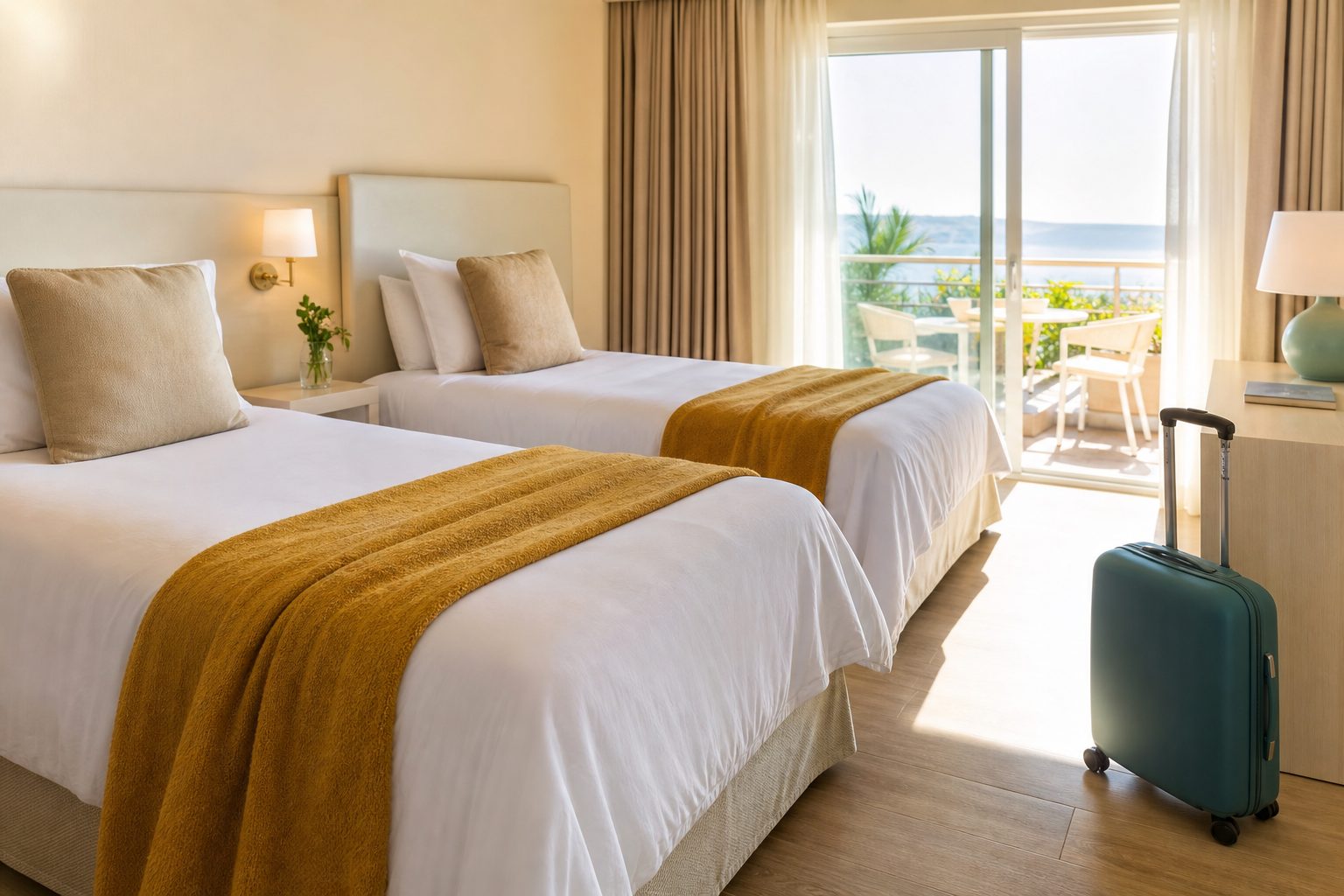
The fairest method is a published one. Collect the same short set of habit based questions from every traveler at booking, match on the handful of factors that actually cause friction at night, and tell people your rules before they pay. Fairness here is not about getting every pairing perfect. It is about every traveler knowing in advance how the decision was made and seeing that the same process was applied to her as to everyone else.
That reframing matters, because complaints almost never arrive as "you matched me badly." They arrive as "why did she get the good room" or "I did not know I would be with a smoker." Both are process failures, and both are preventable with an intake form and a paragraph on your sales page.
Here is a system that holds up across departures.
The intake questions that actually predict compatibility
Keep the form under ten questions. Long forms get skimmed, and skimmed answers are worse than none.
The questions worth asking, in rough order of predictive value:
- What time do you usually go to sleep, and what time do you usually wake?
- Do you need the room dark and quiet to sleep, or can you sleep through light and noise?
- Do you snore, or has anyone told you that you do?
- Do you use a CPAP or any device that runs overnight?
- Preferred room temperature at night: cool, moderate, or warm?
- How long do you need the bathroom in the morning, and would you rather go first or last?
- Do you smoke or vape, including outside the room?
- Are you bringing anything a roommate should know about, such as a strong fragrance routine or a medical schedule?
- Is there anything that would make a shared room genuinely unworkable for you?
Question nine is the safety valve. It catches things you would never think to ask about, and a woman who answers it seriously has told you she needs a single, whether or not she says so.
Ask about behavior, not preferences about people
Avoid anything that invites travelers to state a preference about who they room with in terms of identity. Keep every field about observable habits. It keeps the form defensible and it keeps you out of decisions you should not be making.
Keep reading: Should I buy tour operator liability insurance or just require travelers to insure themselves?
Sleep, temperature and bathroom habits over personality quizzes
Two women can be delighted by each other over dinner and miserable by day three because one is asleep at nine thirty and the other reads until one. Compatibility on a trip is a logistics question dressed up as a social one.
Rank your matching factors and treat the top ones as near absolute:
| Factor | Weight | Rule |
|---|---|---|
| Snoring or CPAP | Highest | Match snorer with snorer, or with a self declared heavy sleeper. Never with a light sleeper. |
| Sleep and wake window | High | Pair within about two hours on both ends. |
| Smoking or vaping | High | Match like with like, always. |
| Night temperature | Medium | Avoid pairing cool with warm where rooms have one thermostat. |
| Bathroom timing | Medium | Pair a first-thing person with a last-minute person deliberately. Opposites work here. |
| Age, job, interests | Lowest | Use only to break ties. |
Bathroom timing is the one place where matching opposites is correct. Two women who both need the shower at 6:45 with a 7:30 departure will resent each other by the second morning.
Handling the solo supplement without punishing single travelers
The supplement is not a penalty, it is the second half of a room. If a twin room costs $180 a night and two women split it, each pays $90. A woman alone in that room costs you $180. The supplement is the missing $90 a night, and saying so plainly defuses most of the resentment.
Two mechanisms are worth knowing:
- Willing to share. She pays the shared rate and accepts a roommate you assign. If you cannot find her a match, you absorb the supplement. That risk should be priced into your trip, not sprung on her at the ninety day mark.
- Guaranteed single. She pays the full supplement and has a room to herself, confirmed.
The unfair version is charging the supplement to a woman who signed up willing to share simply because the numbers did not work out. Decide your policy in advance and print it. A common and defensible approach: the organizer absorbs an unmatched supplement for the first unmatched traveler, and closes willing-to-share bookings once the odd number risk becomes real.
On a twelve seat trip with six twins, absorbing one supplement at $90 a night across nine nights is $810. Spread across twelve travelers that is about $68 each, which you can build into the price quietly instead of billing one woman $810 in month four.
Keep reading: Why do my trips sell out but still barely break even by the final payment date?
Friends traveling together and the odd number problem
Pairs who book together are easy: honor them, always, and confirm in writing that they are rooming together so nobody assumes.
The trouble is threes. Three friends book, two get a twin, one goes into the shared pool with a stranger, and she is the odd one out socially as well as spatially. Handle it explicitly at booking: ask the group of three which member will share with someone new, and get her name in writing from her, not from her friends.
Odd total headcount is the other case. Options, in order of preference:
- Sell one more seat and close the gap.
- Offer the last willing-to-share traveler a single at no extra cost, and tell her it is because the numbers worked out that way.
- Where a triple room is genuinely comfortable, offer it at a reduced rate to three volunteers. Never assign a triple.
Do not solve an odd number by pairing two people you already know are a poor match. The pairing table exists for a reason.
Publishing your pairing rules before anyone signs up
One paragraph on the trip page, restated in the booking confirmation:
Rooms are twin share. We pair travelers using the habit questions in your booking form, prioritizing snoring, sleep schedule and smoking, in that order. Pairings are shared with everyone about 30 days before departure. Single rooms are available for the supplement listed above. If you booked willing to share and we cannot find you a match, you will not be charged extra.
Two effects. Travelers self select more honestly on the form when they can see the factors will be used. And when someone objects later, you are pointing at a rule she agreed to rather than defending a judgment call.
Announce pairings on a fixed date. Drip feeding them creates the impression of negotiation.
See how RoamRoster handles this for small group travel for women
Reassignment on the ground: when and how to move someone
Sometimes it does not work. Have a threshold before you leave so you are not deciding at midnight in a lobby.
Move people for: undisclosed snoring or a device that makes sleep impossible, illness, any safety or harassment concern, or two consecutive nights of genuinely lost sleep. Do not move people because of untidiness, mild irritation, or a single bad evening.
The mechanics that keep it calm:
- Handle it privately, one traveler at a time. Never at the group breakfast table.
- Frame it as logistics, not fault: "I have a room open tonight and I would like to move you into it."
- Ask the front desk about availability before you speak to anyone, so you are offering something real.
- If a single becomes available and one woman takes it, do not bill her mid trip. Absorb it, or set the price before you offer.
- Note what happened, and why, the same day. It informs the next departure.
A pairing worksheet you can reuse every trip
One row per traveler, filled from the intake form, sorted before you match:
| Column | Values | Use |
|---|---|---|
| Booking type | Pair, willing to share, single | Remove pairs and singles first |
| Snore or device | Yes, No, Unsure | Sort into two buckets immediately |
| Sleep window | e.g. 22:30 to 06:30 | Sort ascending inside each bucket |
| Smoke or vape | Yes, No | Hard split |
| Temperature | Cool, Moderate, Warm | Tie break |
| Bathroom | First, Flexible, Last | Prefer opposites |
| Notes | Free text from question nine | Read before finalizing |
The procedure: pull out confirmed pairs and paid singles. Split the rest by snoring, then by smoking. Inside each remaining group, sort by sleep window and pair adjacent rows. Check bathroom timing and swap where two firsts landed together. Read every note field. Then leave it overnight and look again before you send.
Where to go from here
Build the intake form once and reuse it. The questions above are trip agnostic, and the value compounds because you start recognizing patterns across departures.
The friction is in the collection: chasing eleven women for answers while also chasing passports and insurance certificates. RoamRoster gathers the rooming questions with the booking, keeps them next to each traveler on the roster, and sends the pairing announcement and the pre departure notes to the whole group on your schedule. The judgment stays yours. The chasing does not.
Read also

Should I buy tour operator liability insurance or just require travelers to insure themselves?
These two policies cover completely different risks and neither substitutes for the other. What professional liability, general liability and traveler medical each actually pay for.

Why do my trips sell out but still barely break even by the final payment date?
Full rosters hide thin margins. The pricing errors that quietly eat a small group trip: unpriced labor, currency drift, single supplements and the free spot myth.
How do I collect passports and emergency contacts without becoming a data breach risk?
Passport scans, dietary needs and next of kin details are sensitive records you are holding for months. A concrete checklist for collecting, storing and deleting them.